

-
Potted History
Through The AgesSiem Reap started as a peaceful riverside town at the edge of the ancient Khmer world, shaped by the history of Angkor. It was once the center of the Angkorian Empire from the 9th to 15th centuries, surrounded by impressive temples, reservoirs, and canals that showed both advanced engineering and deep religious faith. When Angkor lost its power and was abandoned, the area faded into obscurity, and the stone cities were slowly overtaken by the jungle.
French explorers and scholars revived global interest in Angkor in the late 19th and early 20th centuries, turning Siem Reap into a national treasure for archaeologists, colonial officials, and early tourists. Conservation work, particularly by the École française d’Extrême-Orient, began stabilizing crumbling temples and mapping the vast complex, while modest hotels and infrastructure appeared in town. This era fixed Siem Reap’s identity as a cultural hotspot, bridging ancient Khmer heritage and modern curiosity.
Cambodia faced difficult times during the Khmer Rouge era in the late 20th century, but Siem Reap began to recover in the 1990s when the country reopened and Angkor became a UNESCO World Heritage Site. Tourism grew quickly, turning the quiet town into a popular Southeast Asian destination filled with boutique hotels, restaurants, and creative businesses near the river and Old Market. Today, Siem Reap continues to grow, focusing on the arts, responsible tourism, and community projects that highlight Khmer culture. Families now find a welcoming atmosphere, a variety of child-friendly attractions, and services that cater to all ages, making it an especially convenient and safe place for travel with children.
-
Getting Around
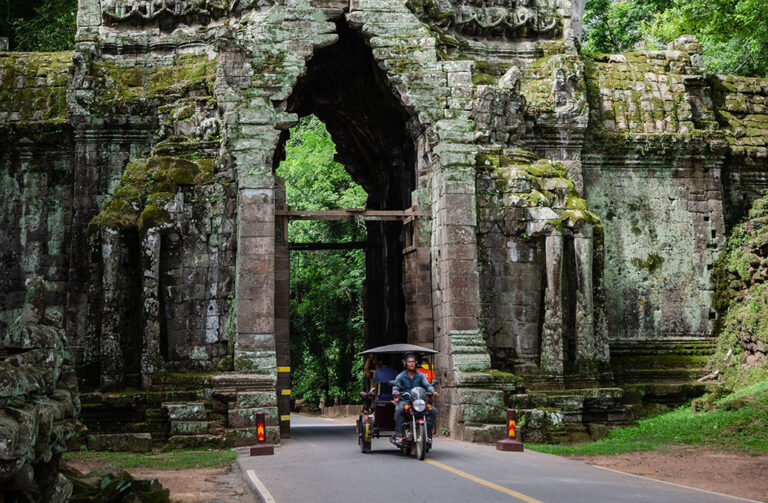
Tuk-Tuks GaloreGetting around Siem Reap is easy. Most people use tuk-tuks, ride-hailing apps, or cars arranged by their hotels instead of public transport. Tuk-tuks are a fun and practical way to get around town or visit temples, and you can agree on the price ahead of time or use apps like Grab and PassApp for set prices and cashless payment. For families with young children, tuk-tuks often accommodate strollers and car seats, making outings more manageable, though it may be more comfortable to use a car or van arranged by the hotel for larger groups. For longer trips or visits to temples farther away, many travelers book air-conditioned cars or vans with drivers through hotels or local agencies, providing extra comfort for family members of all ages. If you enjoy cycling, you can rent a bike to explore the riverfront and quieter streets, and switch to motorized transport if it gets too hot or the distance is too far. The range of flexible transport options makes getting around with children simple and convenient.
-
Key Things To Note Before Visiting
Important DetailsBefore you go to Siem Reap, make sure to check your visa and entry requirements. Most travelers need a passport valid for at least six months, a 30-day tourist visa (either an e-visa or a visa on arrival), and must fill out Cambodia’s e-Arrival card within seven days before flying. It’s a good idea to have travel insurance that covers medical care and emergency evacuation, and to check your government’s latest safety advice, especially for areas near the Thai border. Bring modest clothing that covers your shoulders and knees for temple visits, and carry some small, clean US dollar bills. For families, follow child health and safety tips. Ensure kids drink bottled water and avoid risky street food. Pack a small first aid kit, medicines, and know the local emergency number and hospitals. Keep hand sanitizers handy and encourage frequent hand washing for kids. These steps prepare parents for family needs during the trip. Hand sanitizers can help maintain hygiene. Remember to encourage kids to wash their hands frequently. These tips can help reassure parents and prepare them for family needs during their trip.
-
How To Get To Siem Reap
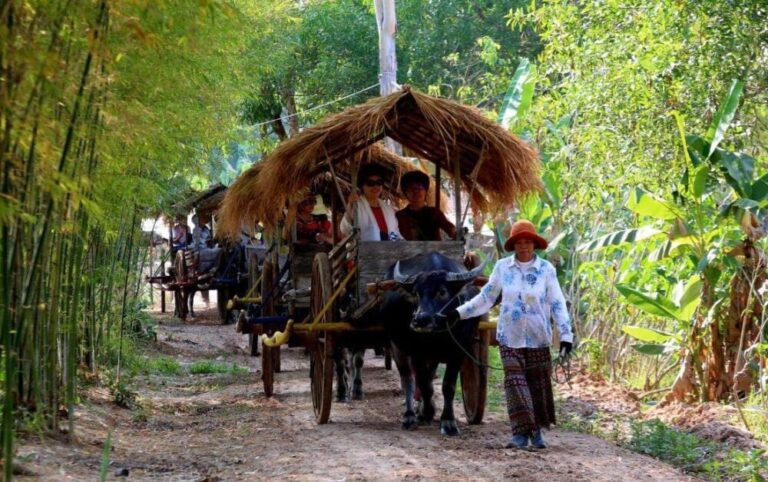
Air Or Overland?Most people get to Siem Reap by flying into Siem Reap–Angkor International Airport from nearby cities like Bangkok, Singapore, Kuala Lumpur, Hanoi, and Ho Chi Minh City. Flights are usually short, about one to two hours, and often on budget airlines. From the airport, you can easily arrange a hotel transfer, take a taxi, or use a ride-hailing app for the 40 to 50-minute trip into town. Many mid-range and upscale hotels include airport pickup in their rates or packages. Traveling overland from Thailand, Vietnam, or Laos by bus or a train-bus combination through the Poipet border is also possible, but rules and border openings can change, so check the latest information before you go. Flying is often the easiest option.
-
When To Travel
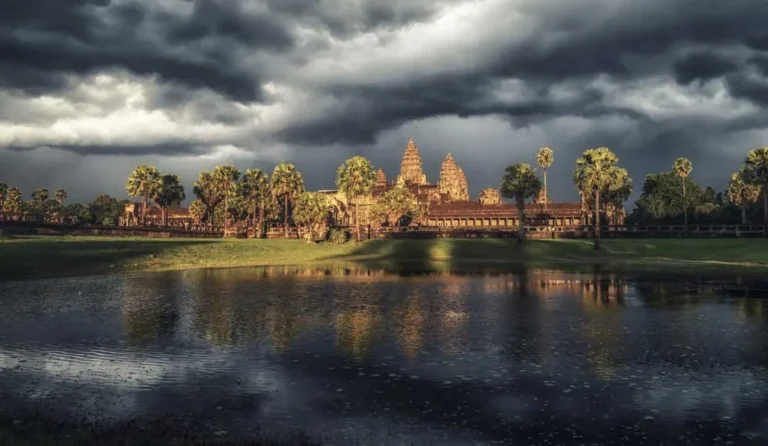
Cool DownThe best time to visit Siem Reap is during the cool, dry months from November to February. Daytime temperatures are comfortable, humidity is lower, and it's easier to spend long days exploring temples. This is also the busiest season, so hotel prices and visitor numbers at Angkor Wat are higher, especially around Christmas, New Year, and Lunar New Year. Sunrise and sunset spots can get crowded, but the weather is ideal for first-time visitors and family outings, as it’s easier for children to enjoy outdoor activities. To avoid crowds, families might consider visiting temples such as Bayon or Ta Prohm later in the afternoon, or explore less-visited sites like Banteay Srei or Preah Khan in the early morning. For a quieter experience, it's advisable to purchase temple passes during off-peak hours and plan temple visits for weekday mornings, so families can enjoy a more relaxed pace.
From March to May, the weather gets much hotter, and the midday heat can make long temple visits tiring. However, exploring early in the morning or late in the afternoon is still enjoyable, and there are fewer visitors. During these times, families can enjoy the cooler parts of the day and avoid the hottest hours by staying in shaded areas or visiting air-conditioned museums. The rainy season is from June to October, with short, heavy showers; however, the scenery becomes lush.
-
Money
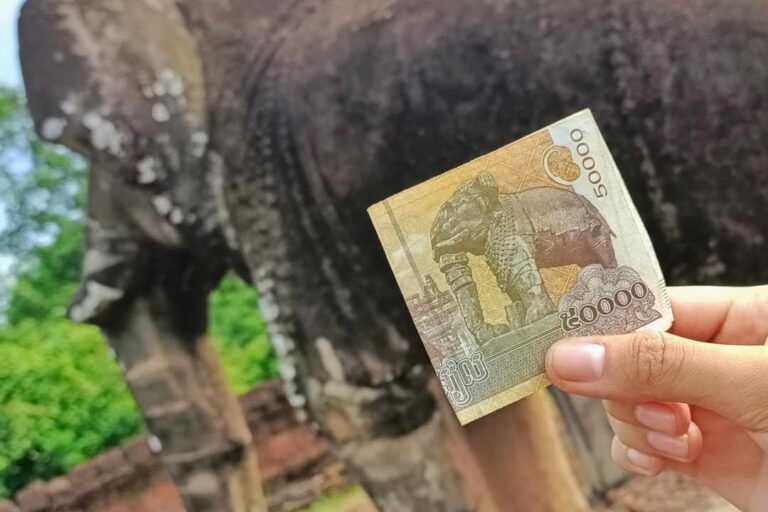
Clean DollarsSiem Reap uses both Cambodian riel and US dollars. Riel is official, but dollars are common for tourists. Hotels and tours use dollars, while markets use riel or give change in riel. The rate is about 4,000 to 4,100 riel per US dollar. Bring small, clean dollar bills for big purchases, and get riel for under $10. Worn US bills may not be accepted, and riel use is becoming more common for bigger expenses. Get some riel locally for smaller purchases under $10. Be aware that worn or torn US bills may not be accepted, and more places are now accepting riel for transactions.
-
Languages
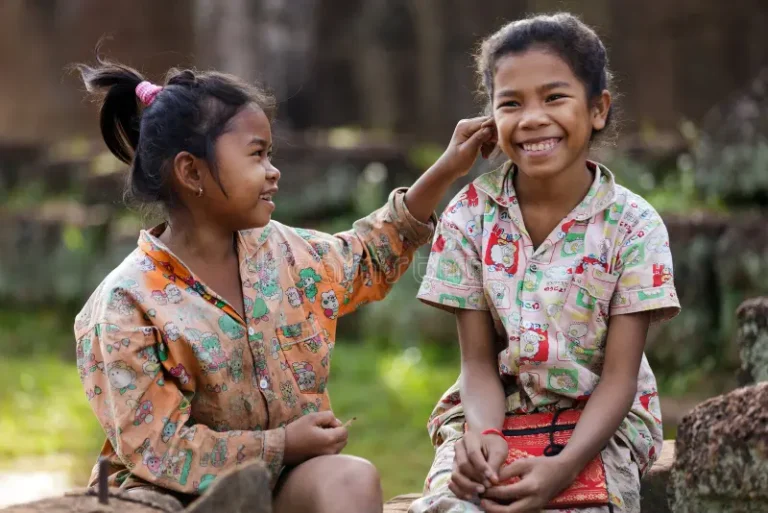
SusadeiKhmer is the main language in Siem Reap and throughout Cambodia, and you’ll hear it in markets, tuk-tuks, temples, and cafés. In the city and near Angkor, English is widely spoken in hotels, restaurants, tour companies, and shops, so most travelers can get by with basic English, especially in tourist areas. Learning a few simple Khmer phrases for greetings and thanks is appreciated. You might also hear French, Chinese, Thai, or Vietnamese in business or among older locals and regional visitors.
Hello (informal): Susadei(soo-sa-day)
Hello/Goodbye (formal): Chom reap sour/Chom reap lear(chom-reep-sour/chom-reep-lear)
Thank you: Arkun (ar-koon)
Yes: Baht/Jah (baht/jah)
No: Ot teh (ot-teh)
How much?: Tamlai ponman? (tam-lie pon-man?)
-
Safety
WelcomeSiem Reap is usually a safe and friendly place to stay while exploring Angkor, but it’s important to be careful. Tourist areas and the Angkor Archaeological Park are generally safe, but you should check the latest travel advisories, as Cambodia has some petty crime, and tensions can occur near border areas. In town, the main problems are bag and phone snatching, especially from passing motorbikes and around tuk-tuks. Keep your valuables secure, avoid walking alone late at night, and use trusted transport arranged by your hotel or a reliable operator. Landmines and unexploded ordnance are only a risk in some rural or remote areas, not in Siem Reap or the main temple sites, but it’s still best to stay on marked paths and avoid wandering into unknown countryside.
-
Angkor Wat And Temple Passes
Pass GoAngkor Wat and the surrounding Angkor temples are accessed with 1-, 3-, or 7-day passes, which you purchase at the official ticket office on the way to the archaeological park. Passes are checked at multiple entry points, so keep yours handy and protected from damage. Arriving very early, well before dawn, lets you buy or validate your pass, reach Angkor Wat in time for sunrise, and enjoy the most famous view of the temple before the main tour groups arrive. After sunrise, it is worth heading straight into the complex or on to other key temples while temperatures are still relatively cool and the crowds are thinner, then breaking for a late breakfast as the heat and buses build.
-
Temple Etiquette
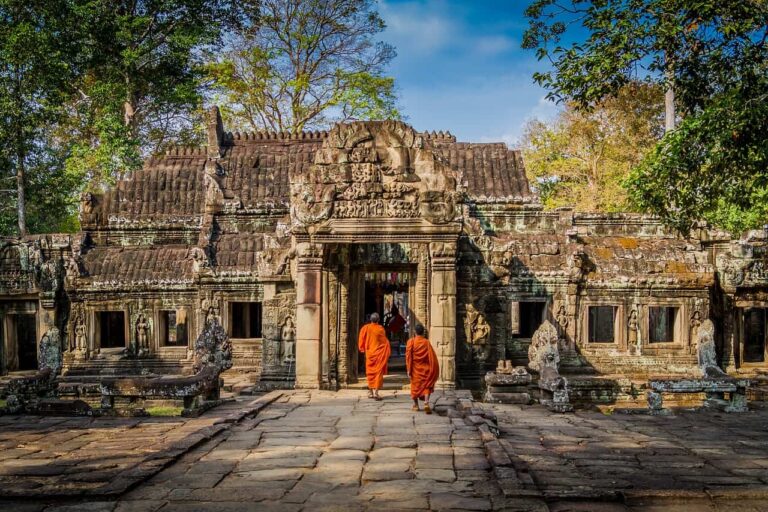
Respectable BehaviorWhen visiting Angkor’s temples, dress and behavior matter. Shoulders and knees should be covered for all genders, avoid sheer or overly tight clothing, and remove hats when entering sacred areas. Speak quietly, refrain from touching carvings, and never climb on railings, statues, or out-of-bounds structures, even if others are doing so. Monks should be treated with respect, ask before taking photos, women should avoid physical contact, and romantic displays, smoking, and littering on temple grounds are inappropriate. Parents should guide children to walk calmly, use their indoor voices, and appreciate the temple structures without touching sacred carvings or climbing on them, ensuring everyone's visit is respectful and enjoyable.
-
Angkor Wat
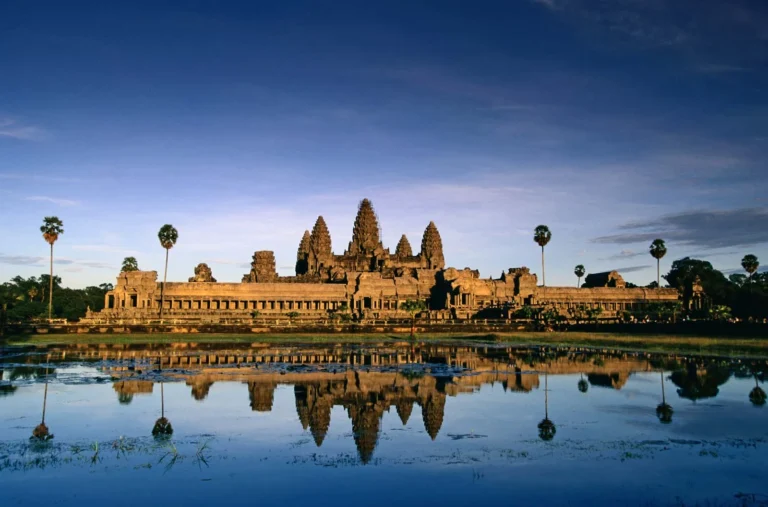
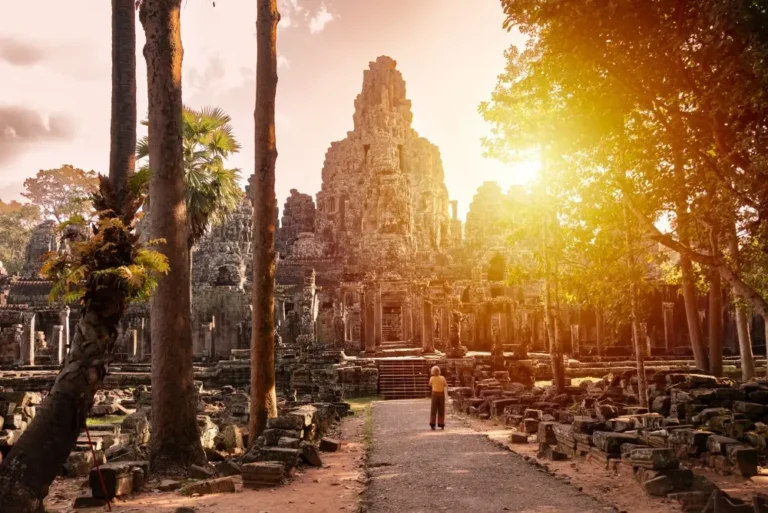
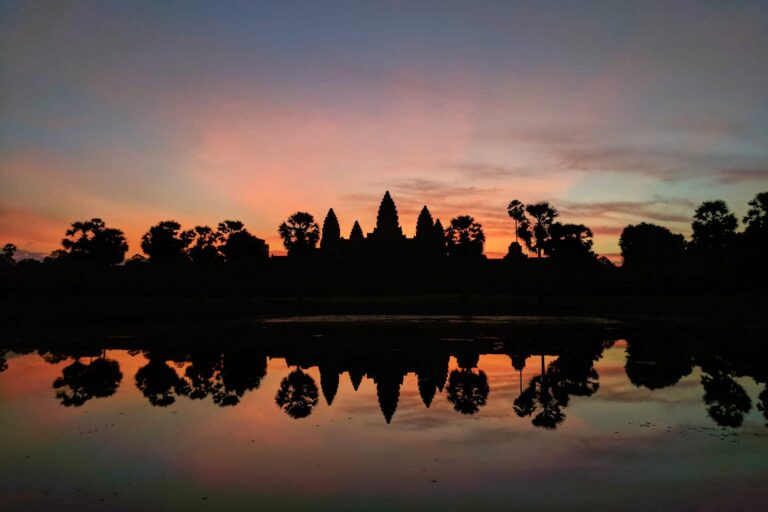
SuperstarThe superstar of the Angkor complex, Angkor Wat, is a vast 12th-century temple built by King Suryavarman II as a state temple and royal mausoleum, and now the world-class symbol of Cambodia. It is famed for its lotus-bud towers, sweeping galleries, and remarkably well-preserved bas-reliefs depicting epic Hindu stories and scenes of courtly life. Most visitors time their visit for sunrise, when the temple’s silhouette reflects in the ponds, and the light slowly reveals intricate carvings, then continue inside to wander its corridors, climb to the upper terraces when open, and explore quieter corners once the main crowds have dispersed.
-
Angkor Thom
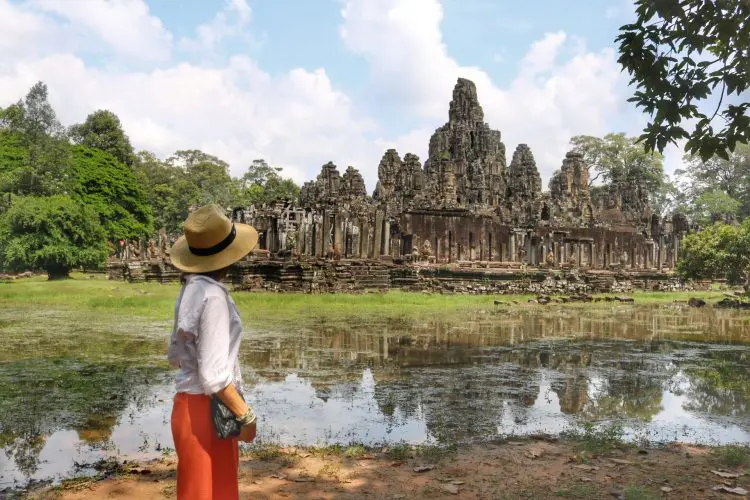
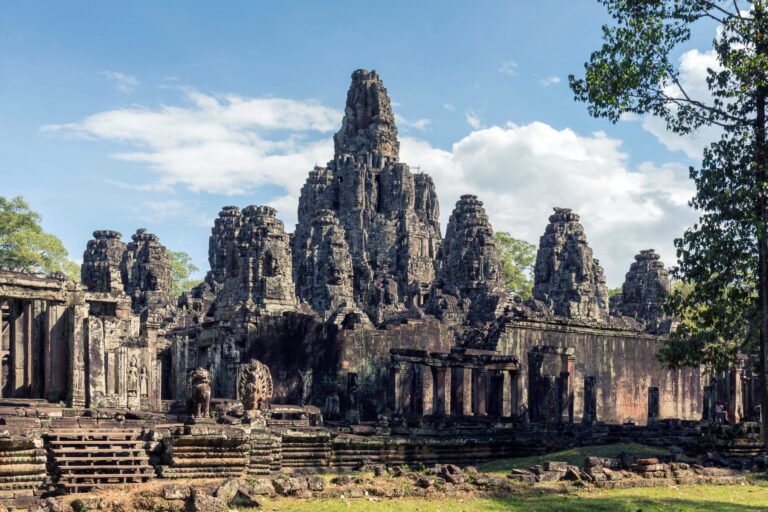
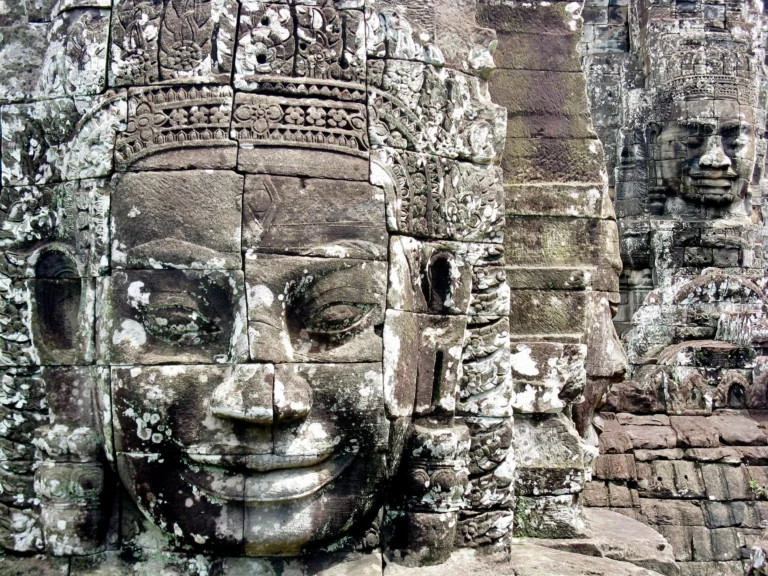
Gods And DemonsThe former walled royal city of the Khmer Empire, Angkor Thom, is laid out as a vast square enclosed by laterite walls, monumental gates, and a surrounding moat, with Bayon at its symbolic and geographic center. Entered via causeways flanked by rows of gods and demons, it opens onto broad avenues and scattered ruins, but most visitors make a beeline for Bayon, the richly decorated state temple built in the late 12th and early 13th centuries by King Jayavarman VII and famous for its towers carved with smiling faces. Inside Bayon, labyrinthine galleries lined with detailed bas-reliefs showing battles, religious scenes, and everyday life lead up to higher terraces where more than 200 faces watch over the former capital, making this one of the most atmospheric stops in the Angkor complex.
-
Ta Prohm
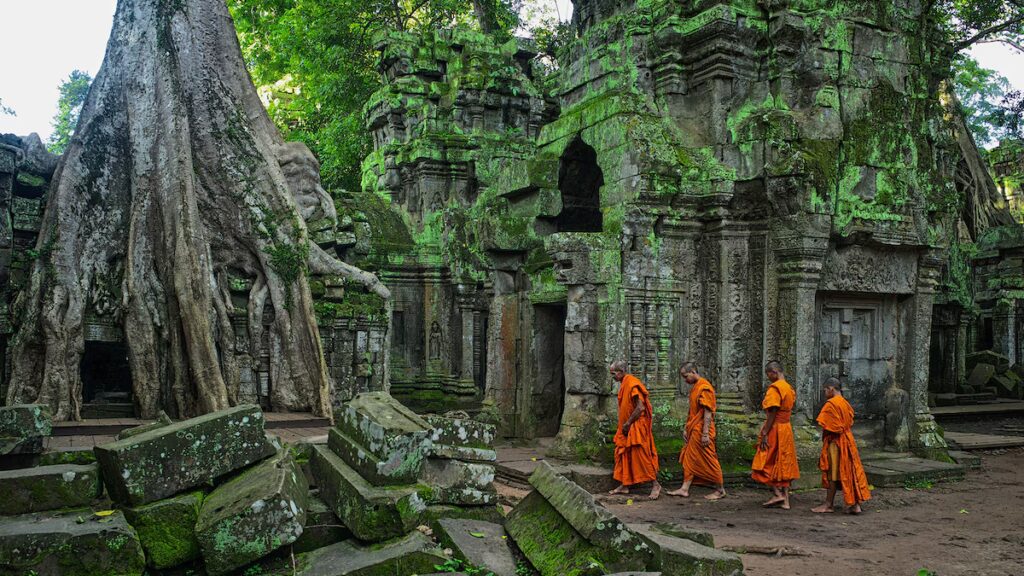
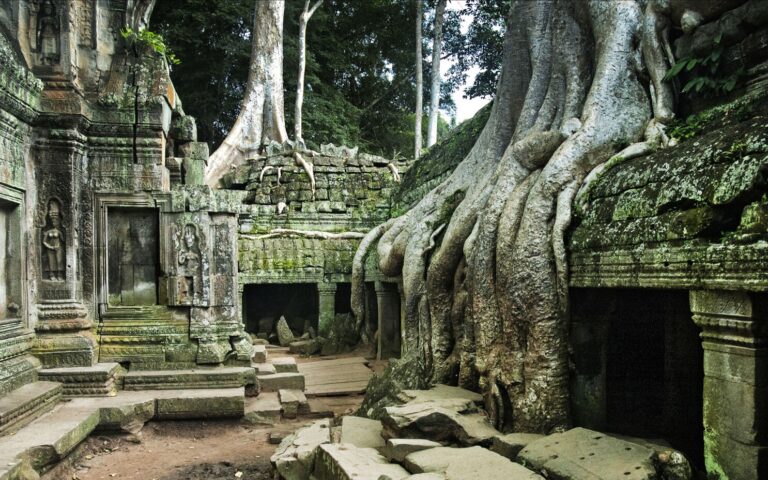
Jungle TempleTa Prohm is one of Angkor’s most atmospheric temples, famous for the way strangler figs and silk-cotton trees spill over its crumbling stone walls and courtyards, creating the jungle-temple feel many visitors associate with Angkor. Built in the late 12th century under King Jayavarman VII as a Buddhist monastery and university, it was originally known as Rajavihara and once supported thousands of monks, priests, and workers. Today, it is deliberately left in a semi-ruined state, with stabilisation rather than full reconstruction, so visitors wander through shadowy galleries, collapsed doorways, and root-wrapped towers that make Ta Prohm a compelling contrast to the more formal grandeur of Angkor Wat and Angkor Thom.
-
Banteay Srei
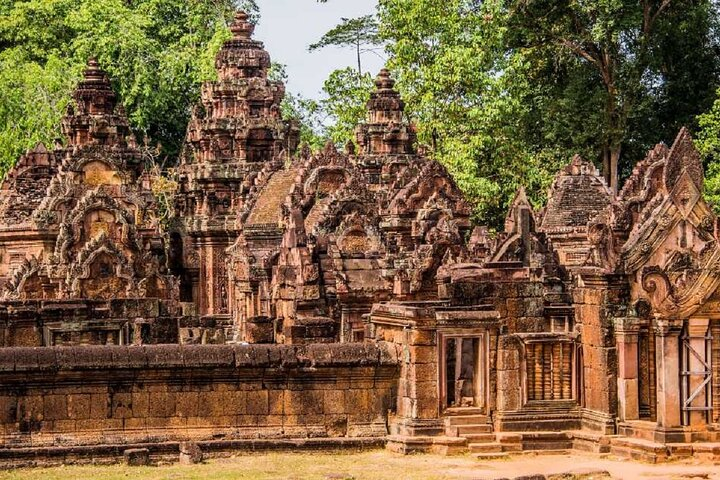
Khmer ArtBanteay Srei, often called the citadel of women, is a smaller 10th-century temple about 25 kilometers northeast of the main Angkor complex, celebrated for its exquisite pink sandstone and some of the finest, most intricate carvings in Khmer art. Unusually for Angkor, it was commissioned not by a king but by learned courtiers and dedicated primarily to Shiva, with its pediments and lintels adorned with remarkably detailed scenes from Hindu epics such as the Ramayana and the Mahabharata. The temple’s compact scale, glowing stone in early-morning and late-afternoon light, and dense decorative work, devatas, floral motifs, and mythological reliefs on nearly every surface make it a favorite side trip for travelers looking beyond the big three of Angkor Wat, Angkor Thom, and Ta Prohm.
-
Preah Khan
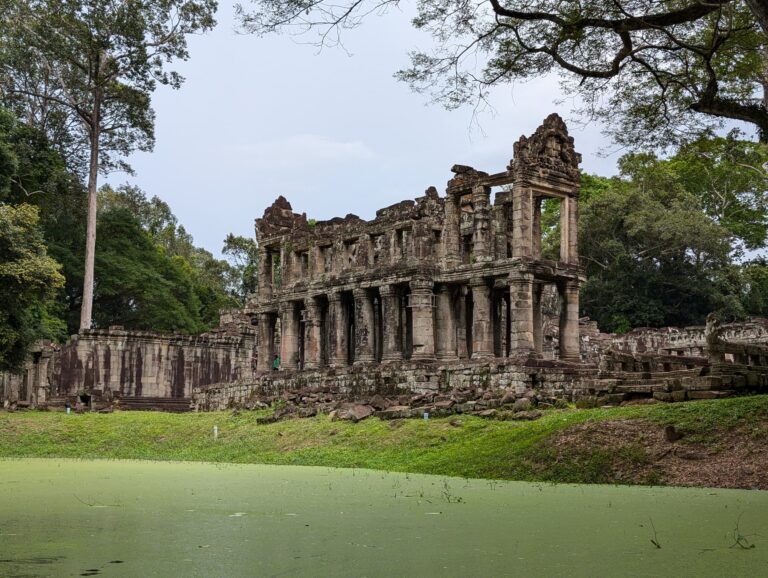
Sacred SwordMeaning sacred sword, Preah Khan is a sprawling 12th-century temple complex just north of Angkor Thom, built by King Jayavarman VII to commemorate a major victory over invading Cham forces and honor his father. It once functioned as a combined city, monastery, and center of learning, with thousands of residents and attendants, and today feels like a maze of long corridors, columned halls, and half-collapsed sanctuaries laced with jungle. Partially restored but still atmospheric, Preah Khan is known for its Hall of Dancers, tree-framed doorways, and quiet side courtyards.
-
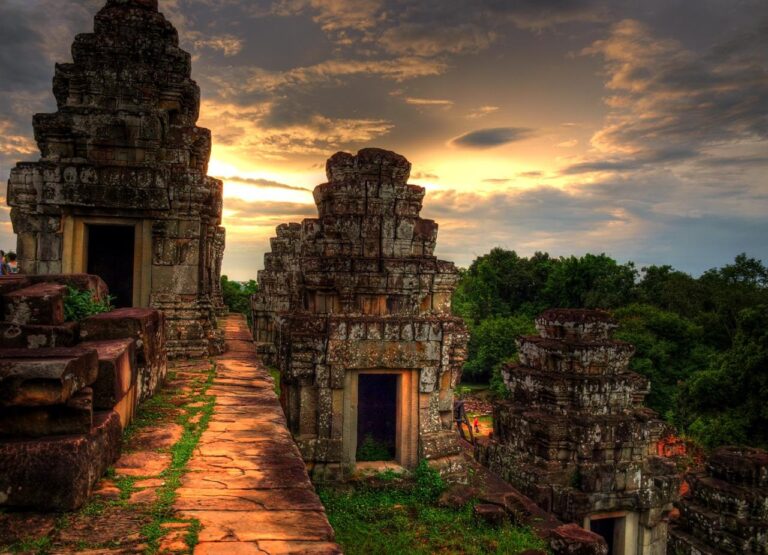
Phnom Bakheng
Forest ViewsOne of Angkor’s oldest hilltop temples, Phnom Bakheng is a late 9th–early 10th-century temple mountain built by King Yasovarman I and dedicated to Shiva, with a stepped pyramid design that symbolizes Mount Meru and the seven Hindu heavens. It sits atop a 65-metre hill between Angkor Wat and Angkor Thom, and today is best known as a sunset spot, where a timed-entry system often limits numbers at the summit, and visitors climb up in the late afternoon for wide views over the forest and Angkor Wat’s towers on the horizon.
-
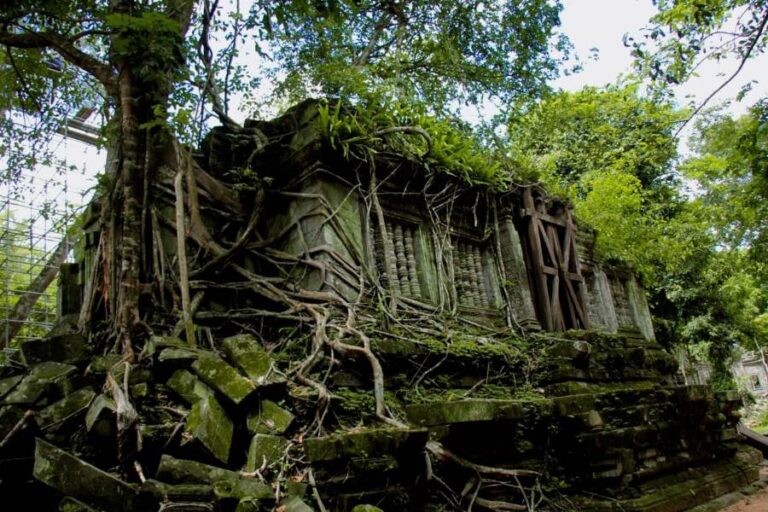
Beng Mealea
Wild And RomanticBeng Mealea is a sprawling, semi-collapsed 12th‑century temple about 60 to 70 kilometers east of Siem Reap, thought to be a contemporary of Angkor Wat and likely built during the reign of King Suryavarman II. Its layout loosely follows Angkor Wat’s ground plan, but the experience is very different here. Much of Beng Mealea has been left in a wild, romantic state, with tumbled sandstone blocks, tree roots, and moss-covered galleries creating the feel of a lost city slowly reclaimed by the forest.
-
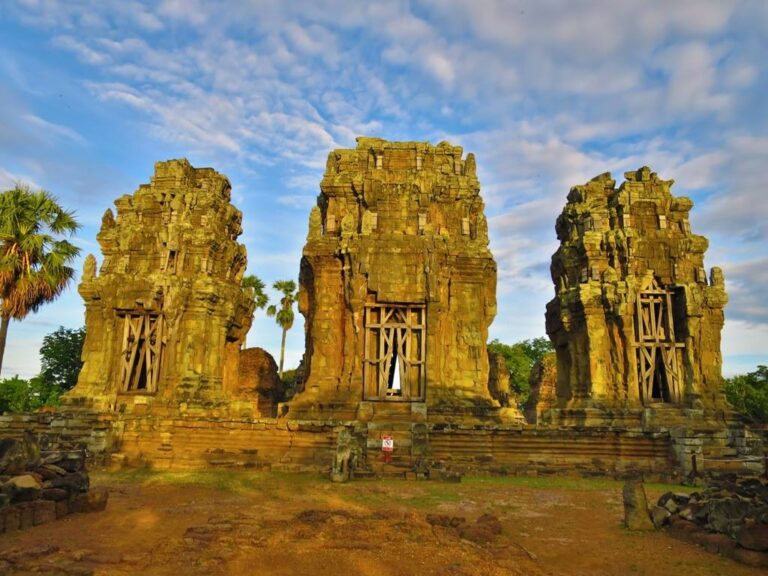
Phnom Krom
Hilltop TemplePhnom Krom is a hilltop temple about 12 kilometers southwest of Siem Reap, built in the late 9th–early 10th century during the reign of King Yasovarman I and dedicated to the Hindu trinity of Shiva, Vishnu, and Brahma. The complex crowns a 140‑metre hill overlooking the Tonlé Sap floodplain, with three sandstone towers on a shared platform and a laterite enclosure wall, now weathered by more than a millennium of wind and rain. Today, Phnom Krom is best known as a peaceful sunset spot. Visitors climb the stepped path in the late afternoon to wander the quiet ruins, visit the nearby active pagoda, and enjoy wide views over rice fields, villages, and the lake.
-
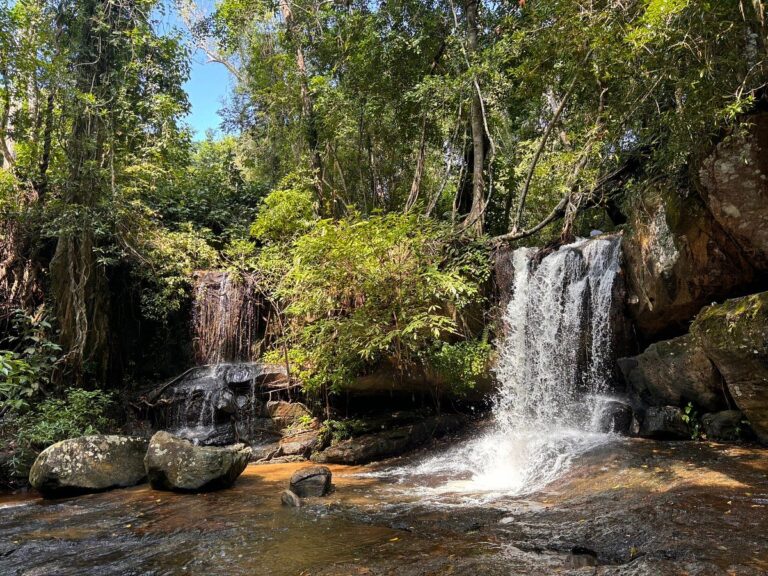
Kbal Spean
River Of A Thousand LingasKbal Spean, often called the River of a Thousand Lingas, is an Angkorian-era archaeological site set in the jungle on the southwest slopes of the Kulen Hills, about 50 to 60 kilometers northeast of Siem Reap and around 25 kilometers from the main Angkor temples. It is a stretch of river where the sandstone bed and banks have been intricately carved with grids of lingas, the phallic symbols of Shiva, yoni designs, and reliefs of Hindu deities such as Shiva, Vishnu, and Brahma, believed to bless the waters that flow downstream towards Angkor. Reached via a 30 to 40-minute uphill forest walk from the car park, Kbal Spean rewards the effort with a blend of nature and spirituality, featuring shallow cascades and a small waterfall running over sacred carvings.
-
City, Culture, Food, And Nightlife
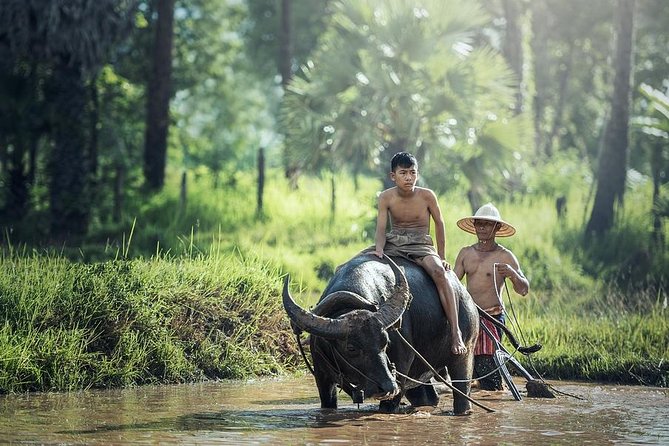
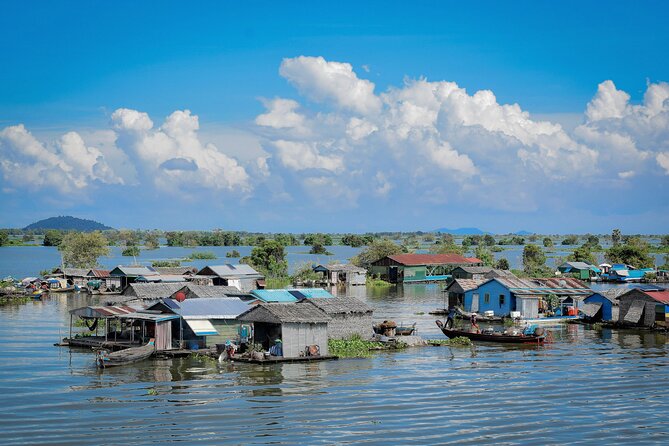
Local LifeSiem Reap has grown into a lively small city with a small, walkable center that makes it easy to dip into local life between temple days. The Old Market area mixes souvenir stalls with fresh produce and spice sellers, while the boutique-filled streets around Kandal Village showcase a more contemporary side, with independent shops, galleries, and cafés. Further afield, half-day trips to nearby floating villages or the surrounding countryside offer a glimpse of stilted homes, rice fields, and river life, and visits to workshops making Khmer ceramics or handicrafts add an interesting cultural experience.
Eating well is almost a given here, with everything from simple street stalls to chef-led kitchens. Classic dishes to look out for include fish amok, a fragrant coconut curry often steamed in banana leaves; lok lak, stir-fried beef with lime and Kampot pepper; and num banh chok, a rice noodle breakfast dish topped with aromatic curry and herbs. For families, many restaurants offer kid-friendly options, including popular dishes that are milder or easily adaptable for children. Look for places with kids’ menus, high chairs, or play areas to make dining out with little ones more enjoyable. You will find riverside cafés, socially minded training restaurants, and a handful of destination spots that pair refined Khmer or pan-Asian menus with carefully curated wine lists and smart interiors.
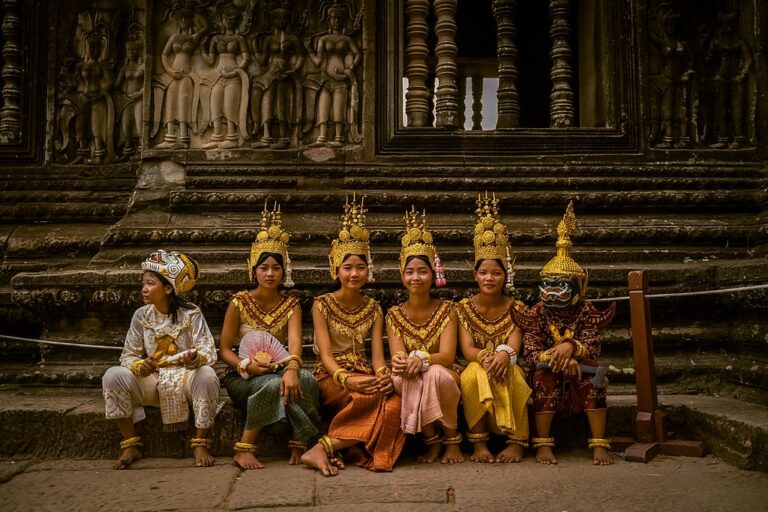
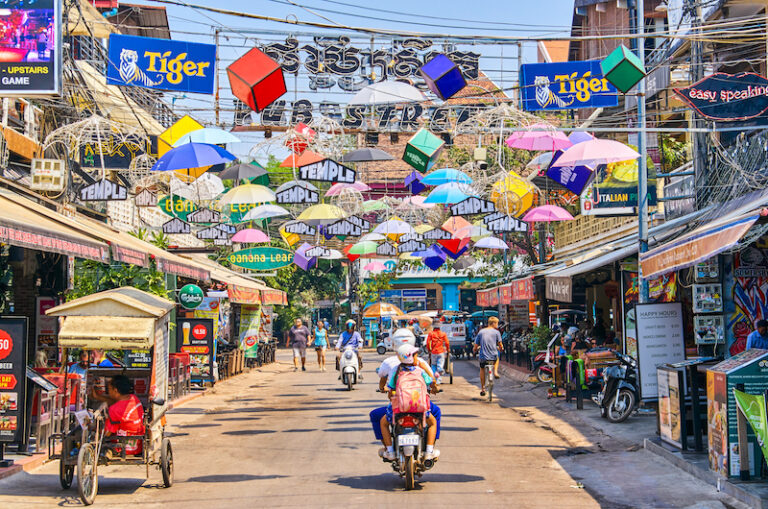
Evenings tend to revolve around Pub Street and its surrounding lanes, where open-front bars, happy-hour cocktails, and casual eateries create a buzzy, backpacker-friendly atmosphere. Those after a softer landing can choose rooftop bars for Angkor beer and sunset views, or book a seat at an Apsara dance performance that combines traditional choreography with Khmer music. After long days at the temples, many visitors build in time for a foot massage, spa treatment, or herbal steam at one of the city’s numerous spas and massage shops, turning Siem Reap nights into a gentle reset before the next morning’s early start.
- Artisans Angkor, https://artisansangkor.com/
- Kandal Village, https://www.instagram.com/kandal_village/?hl=en
- Old Market, https://maps.app.goo.gl/
- Kompong Khleang Floating Village Tours, https://maps.app.goo.gl/
- Pub Street, https://maps.app.goo.gl/
-
Best Restaurants
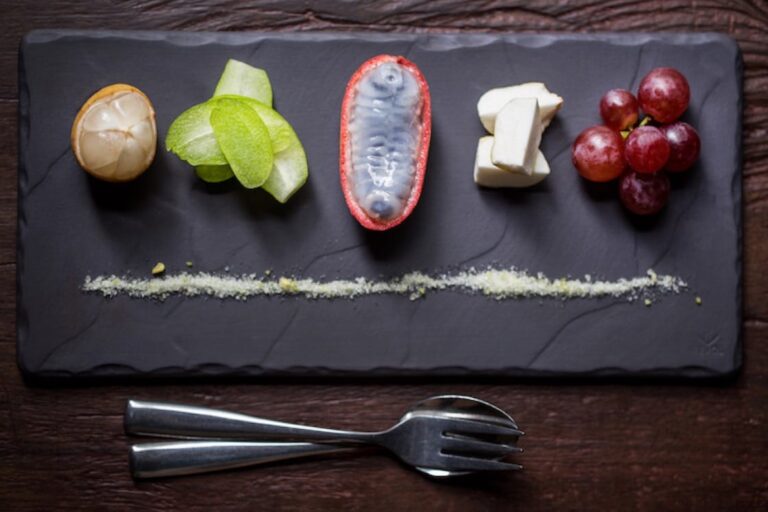
Tasty DishesSiem Reap has evolved into one of Southeast Asia’s most appealing small-city dining destinations, with a restaurant scene that feels far bigger than its footprint. From refined Khmer tasting menus and chef-driven fine dining to social-enterprise cafés and relaxed spots near the Old Market and Pub Street, you can easily plan every evening around food without repeating yourself. This selection of top restaurants highlights places that pair a strong sense of Cambodian flavour with atmosphere, consistency, and warm hospitality.
- Embassy Restaurant Refined multi-course Khmer gastronomy in an intimate dining room, with seasonal tasting menus and strong wine pairings. https://www.embassy-restaurant.com/
- Cuisine Wat Damnak Chef-led Cambodian tasting menus with a modern twist and a focus on local produce; one of the city’s most acclaimed tables. https://www.cuisinewatdamnak.com/siem-reap/
- Malis Siem Reap Elegant Khmer restaurant known for polished versions of classic Cambodian dishes in a stylish setting. https://malis.thalias.com.kh/malis-siem-reap/
- Chanrey Tree Riverside Cambodian restaurant offering elevated local flavors in a charming wooden house with garden seating. https://www.chanreytree.com/
- The Sugar Palm Long-running spot for traditional recipes and curries, often recommended for first-timers wanting authentic Khmer cooking. https://www.thesugarpalm.com/
- Kroya by Chef Chanrith Upscale Khmer and Asian-inspired cuisine at Shinta Mani, with creative presentations and a fine-dining feel. https://kroya.restaurant/
- Damnak Lounge Fine Dining White-tablecloth setting serving French-influenced Khmer menus; popular for special-occasion dinners. https://www.instagram.com/damnaklounge/
- Abacus Restaurant Contemporary French fine-dining with a lush garden setting and a reputation for excellent meat and wine list. https://restaurantabacus.com/
- Ox Club Restaurant Steakhouse and European restaurant noted for high-quality beef, seafood, and polished service. https://oxclubrestaurant.com/siemreap/
- Embassy by Chef Kimsan is frequently highlighted on fine-dining shortlists for Siem Reap, reinforcing its status as a destination restaurant. https://www.embassy-restaurant.com/
- Khmer Kitchen Restaurant Casual favorite near the Old Market for homestyle Cambodian dishes at friendly prices. https://www.khmerkitchens.com/
- Haven Social-enterprise restaurant training young Cambodians, serving approachable Asian and Western comfort food. https://havencambodia.com/
- Banlle Vegetarian Restaurant Plant-forward menu in a peaceful garden, popular with vegetarians and wellness-focused travellers. https://www.facebook.com/banlle.vegetarian.restaurant/?_rdr
- Café Indochine Classic Siem Reap restaurant in a traditional wooden house, offering Khmer and regional dishes in an atmospheric space. https://cafeindochinerestaurant.com/
- Mesa Restaurant Stylish fusion spot blending Cambodian, Vietnamese, and Japanese influences, handy for a good meal near the nightlife streets. https://www.facebook.com/mesarestaurantpubsteet
-
Phare Acrobatic Circus
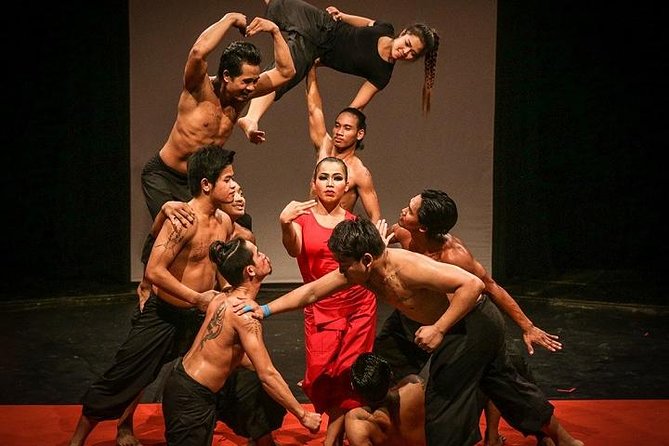
Circus With a PurposePhare, The Cambodian Circus, is one of Siem Reap’s most compelling evening experiences, blending high-energy acrobatics, live music, and theatre with contemporary Cambodian stories drawn from history and everyday life. Performed under a big top just outside the center of town, the shows are intimate and fast-paced. Expect human pyramids, juggling, contortion, and physical comedy. What sets Phare apart is its social mission: the artists are students and graduates of the Battambang-based NGO Phare Ponleu Selpak, and ticket sales help fund free arts education and provide fair-wage creative careers for young Cambodians.
Phare Acrobatic circus, Sok San Road, Krong Siem Reap, Cambodia, +855 92 225 320, sales@pharecircus.org, https://pharecircus.org/
-

APOPO
The Ratty HeroesAPOPO’s Visitor Center in Siem Reap offers a fascinating look at the HeroRATs, African giant pouched rats trained to sniff out landmines and other explosives that still contaminate parts of Cambodia. During a visit, you learn how these highly trained animals detect traces of TNT without triggering the mines themselves, watch live demonstrations in a mock minefield, and hear how their work, combined with deminers and dogs, helps return farmland and villages to local communities. It is an engaging, family-friendly experience with a strong educational and humanitarian angle, and entrance fees and donations support ongoing clearance operations in Siem Reap and other provinces.
APOPO, Trapeang Ses Village, Kouk Chauk Commune, Koumai Road, Siem Reap, Cambodia, +855 8159 9237, visitor.center@apopo.org, https://apopo.org/
-
Original Vespa Adventures
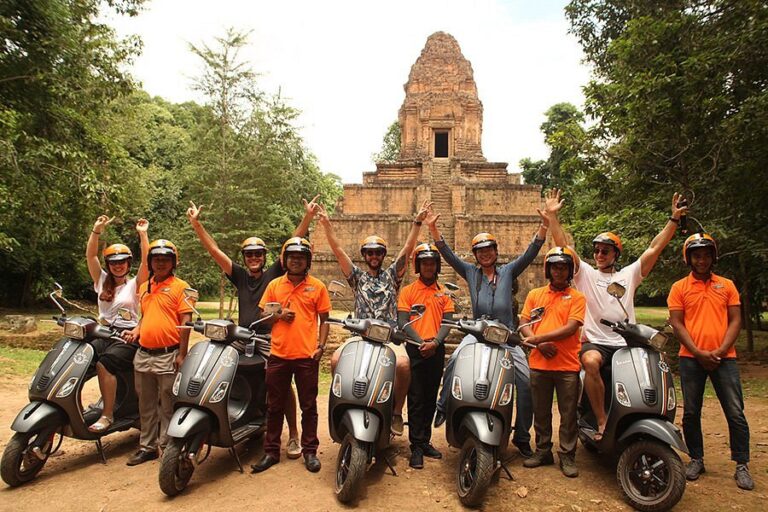
The Ride of Your LifeOriginal Vespa Adventures in Siem Reap offers small-group, guided tours on the back of classic Vespas, designed to show a more local side of the city and its countryside. Signature experiences include countryside rides through rice fields and villages, sunrise or temple-focused routes that approach Angkor’s outskirts via backroads rather than main tour-bus arteries, and after-dark foodie tours that link markets, street-food stops, and hidden cocktail bars in one evening. Each guest rides pillion with a dedicated, trained driver, while an English-speaking guide leads the group, so there is no need to drive yourself!
Original Vespa Adventures, https://www.vespaadventures.com/
-

Siem Reap Quad Bike Adventure
Dusty BackroadsSiem Reap Quad Bike Adventure takes visitors out of town on guided ATV rides through rice fields, stilted villages, and dusty backroads, offering a different perspective on Cambodian life than you get from temple touring alone. After a short safety briefing and practice session, even beginners can join relaxed one- to three-hour routes that often return for golden-hour light or full sunset, with photo stops along the way and plenty of waves from local children. Many tours include hotel pick-up, helmets, and an English-speaking guide, and some pair quad biking with extras such as a visit to a Buddhist pagoda, Phare circus tickets, or a post-ride spa session.
Siem Reap Quad Bike Adventure, Sala Kamreuk Road, Siem Reap City, Cambodia, +85 59 6555 5411, sale@srquadbikeadventure.com, https://srquadbikeadventure.com/
Want more? Check out the Little Steps Guide To Visiting Angkor Archaeological Park In Siem Reap With Kids https://www.littlestepsasia.com/travel/cambodia/siem-reap/angkor-archaelogical-park/
-
Neighborhoods
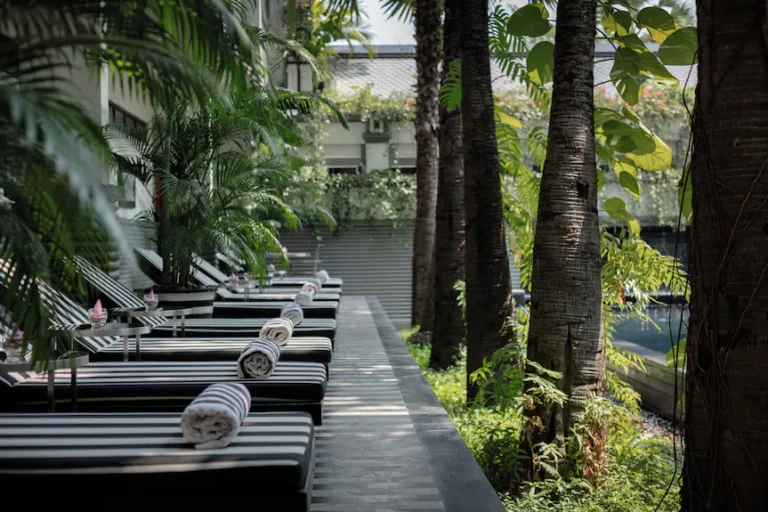
Sleep WellSiem Reap’s Old French Quarter is ideal for first-time visitors who want to be within easy reach of the river, Angkor tour departures, and the main dining streets without being directly in the party zone. It has a concentration of mid-range and upscale properties in restored or sympathetically designed buildings, often with leafy courtyards and polished service. Here you might choose a characterful boutique hotel with a decent pool and spa, a reliable international-brand option with family rooms and strong facilities, or a design-led stay that leans into sustainability and local art.
The streets around the Old Market and Pub Street suit travelers who want a walk-to-everything base and do not mind some noise, especially at night. This area is packed with guesthouses, hostels, and small hotels that work well for short stays, solo travelers, and those planning to be out most of the time. Expect plenty of budget and lower mid-range options with simple rooms and plunge pools, plus a few smarter boutique hotels tucked into side streets, offering quieter rooms just a few minutes’ walk from the action.
Across the river, neighborhoods such as Wat Bo and Sala Kamreuk, and the corridor heading towards Airport Road, offer a calmer experience with more space and a growing cluster of stylish boutique and resort-style properties. These areas suit longer stays, couples, and higher-end travelers who value gardens, larger pools, and on-site spas, as well as families looking for compound-style layouts and interconnecting rooms. You will find everything from good-value, design-forward small hotels to villa-like resorts with strong wellness offerings and a softer, more residential feel, usually a short tuk-tuk ride from the Old Market and Pub Street.
- Ultimate Family-Friendly Guide To Siem Reap – Hotels, Activities, More https://www.littlestepsasia.com/travel/cambodia/siem-reap/family-friendly-guide-to-siem-reap/
- Cambodia Cool: Savor A Sumptuous Stay In Siem Reap At Angkor Grace Wellness Resort https://www.littlestepsasia.com/travel/cambodia/siem-reap/angkor-grace/
- Family-Friendly Raffles Grand Hotel d’Angkor Re-Opens In Siem Reap, Cambodia! https://www.littlestepsasia.com/travel/cambodia/family-friendly-cambodia-with-raffles/
- Song Saa Private Reserve In Siem Reap https://www.littlestepsasia.com/travel/cambodia/siem-reap/song-saa-private-reserve/
-
The Best Places To Stay In Siem Reap, Cambodia
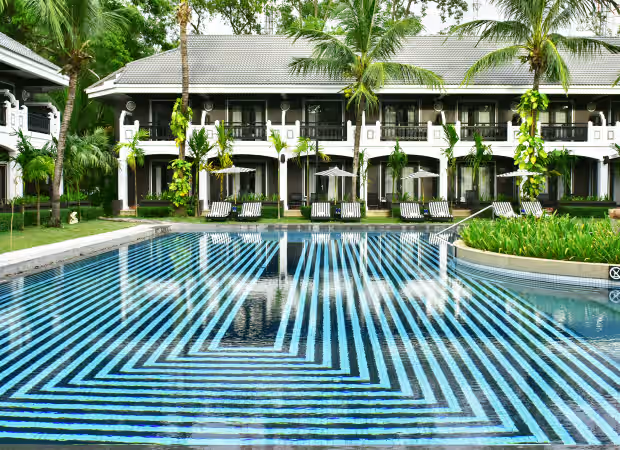
Blissful StaysSiem Reap’s hotel scene is remarkably strong for a small city, with stays that range from discreet, design-driven hideaways to big, family-friendly resorts. Little Steps has hand-picked the hotels below so that you can choose to be in the heart of the Old French Quarter, tucked along the river in Wat Bo, or cocooned in a wellness-focused retreat on the edge of town.
-
Shinta Mani Angkor
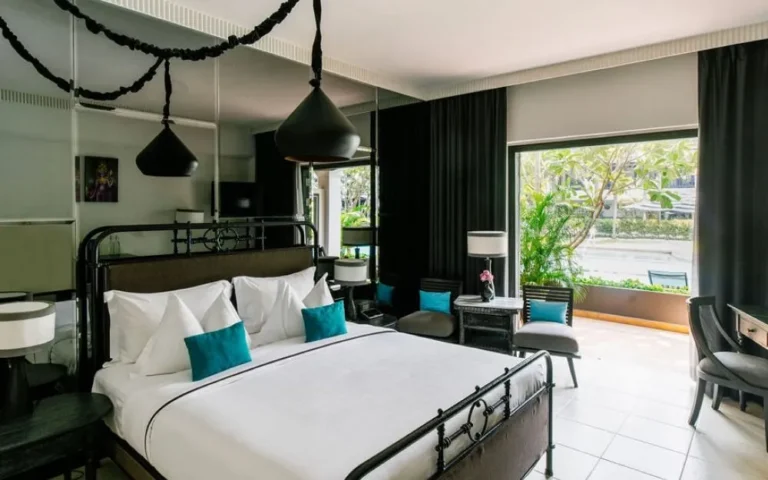
Contemporary Khmer AestheticDesign-led luxury hotel Shinta Mani Angkor in Siem Reap’s Old French Quarter was created by architect Bill Bensley and is known for its contemporary Khmer aesthetic, courtyard pools, and intimate, boutique scale. Rooms and suites blend clean modern lines with local materials and art, including comforts such as high-quality bedding, rain showers, coffee and tea facilities, and fast Wi‑Fi, with some categories adding pool access or larger balconies that work well for longer stays.
The hotel’s location put guests within easy reach of the river, Royal Gardens, and a short tuk-tuk ride from Pub Street and the Old Market, making it a convenient base for temple days and evenings out on the town. On-site, there are two outdoor pools, a full-service spa, and refined dining at Kroya and Bensley’s Bar. A portion of revenue supports health, education, and development projects through the Shinta Mani Foundation, appealing to travellers looking for a stay with a genuine community-impact angle.
Shinta Mani Angkor, Junction of Oum Khun & 14th Street, Siem Reap, Cambodia, +855 63 964 123, angkor@shintamani.com, https://shintamani.com/angkor/
Shinta Mani Club in Siem Reap https://www.littlestepsasia.com/travel/cambodia/siem-reap/shinta-mani-club-in-siem-reap/
-
Park Hyatt Siem Reap
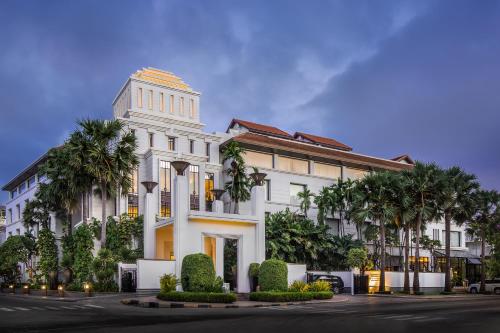
Courtyard PoolsPark Hyatt Siem Reap is an urban luxury retreat right in the heart of town, set on Sivutha Boulevard just a few minutes’ walk from the Old Market, Pub Street, Angkor Night Market, and the Royal Garden. The design mixes clean, contemporary lines with Khmer flourishes, think stone, wood, and courtyard pools, with 104 individually furnished rooms and suites offering deep soaking tubs or rain showers, and, in some categories, private plunge pools or direct pool access, alongside 24-hour room service and strong in-room tech.
The hotel is a calm base between temple days, with two outdoor pools, a 24-hour gym, and a full-service spa offering everything from Khmer and Thai massages to aromatherapy and reflexology, plus several stylish dining options including The Dining Room, The Glasshouse, and The Living Room bar. Families benefit from central location, soundproofed rooms, and kid-friendly touches.
Park Hyatt Siem Reap, Sivutha Boulevard, Siem Reap, Cambodia, +855 6321 1234, reservations.repph@hyatt.com, https://www.hyatt.com/en-US/hotel/cambodia/park-hyatt-siem-reap/repph
-
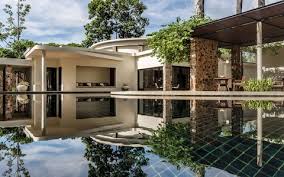
Amansara
Luxurious HideawaySiem Reap’s most discreetly luxurious hideaway, Amansara, is set in the former 1960s guest villa of King Norodom Sihanouk, just minutes from the Angkor Archaeological Park. Behind an unmarked gate on the road to Angkor, the low-slung New Khmer–style buildings frame manicured lawns, a curved main pool, and a striking circular dining pavilion, creating an exclusive garden enclave that feels far removed from the bustle of town while still being only around 10–15 minutes from the temples and the Old Market.
The resort has just 24 open-plan suites, 12 with private plunge pools, all designed in Aman’s signature minimalist style with polished stone floors, dark timber, floor-to-ceiling glass, and private courtyards with outdoor seating. Stays typically include daily excursions with an in-house guide and custom remork (tuk-tuk), along with refined Khmer and Western dining, a tranquil spa, yoga terrace, and exceptionally personalised service.
Amansara, Road to Angkor, Siem Reap, Cambodia, +855 63 760 333, amansarares@aman.com, https://www.aman.com/resorts/amansara
-
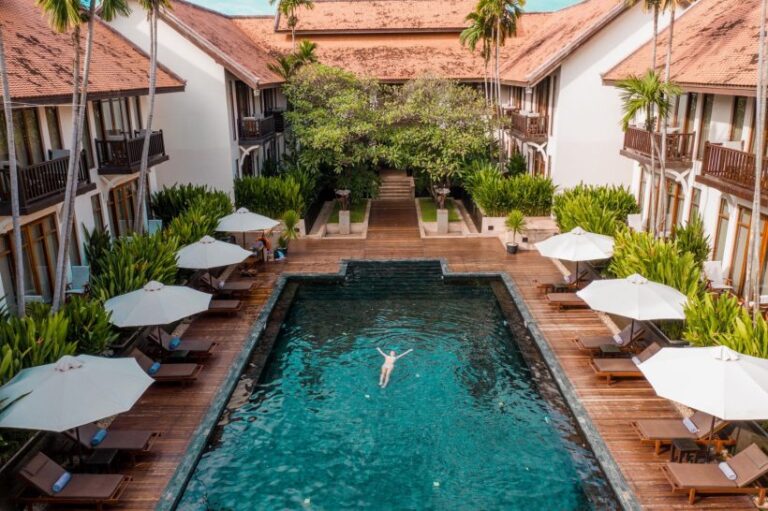
Anantara Angkor Resort
All-Suite HideawayAnantara Angkor Resort is an all-suite hideaway on the airport road, designed as a low-rise courtyard residence wrapped around a central saltwater pool and gardens, with just 39 Khmer-inspired suites that feel like private retreats. Interiors mix dark wood, tiled floors, and carved details with generous bathrooms, many with soaking tubs, and in higher categories, private courtyards, plunge pools, or daybeds.
The resort affords wellness and tailored experiences, with a full Anantara Spa offering Khmer and Thai treatments, yoga spaces, and healthy menu options alongside more indulgent Cambodian and international dishes at its main restaurant. Location-wise, it sits between the airport and town, so guests can reach Angkor Wat in about 15 minutes and the Old Market and Pub Street areas in about 10 minutes by tuk-tuk.
Anantara Angkor Resort, National Road no. 6, Khum Svay Dangkom, Siem Reap, +855 63 966 788, angkor@anantara.com, https://www.anantara.com/en/angkor-siem-reap
-
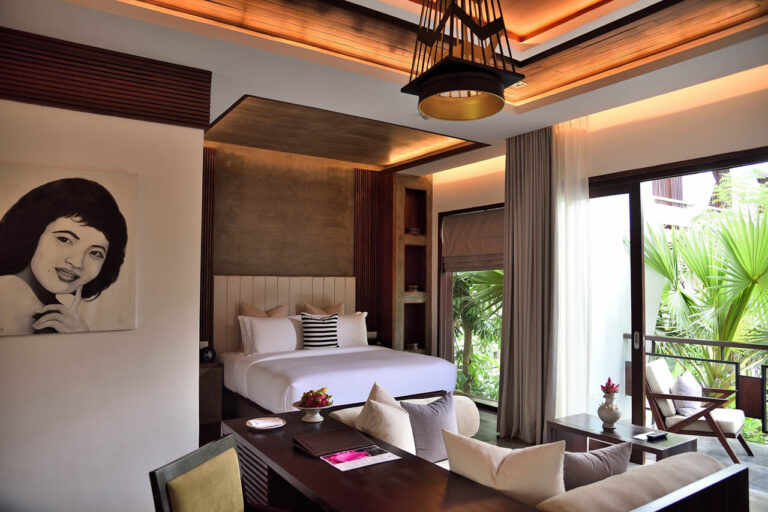
Jaya House River Park
Bliss!Jaya House River Park is a riverside boutique hotel set along a quiet stretch of the Siem Reap River, about a 5–10-minute tuk-tuk ride from the Old Market and Pub Street, giving it a resort-like feel within easy reach of the city. It has just 36 rooms and suites, all with either balconies or direct garden and pool access, and is wrapped in mature trees and lush planting, with two inviting pools, one lined with distinctive silver tiles. Known for genuinely warm, intuitive service, the hotel layers in thoughtful extras such as complimentary tuk-tuk transfers into town, daily spa time, and treats by the pool. Bliss!
Sustainability is a defining part of the experience: Jaya House is proudly plastic-free, uses refillable glass bottles and filtered water stations, and helped spearhead the ReFill Not Landfill initiative in Cambodia, which encourages travelers and local businesses to reduce single-use plastic. The spa blends Khmer and broader Southeast Asian techniques, while the on-site restaurant focuses on fresh, locally influenced dishes, so guests get a strong sense of place and the comfort of a self-contained retreat.
Jaya House River Park, River Road, Treang Village, Slor Kram Commune, Siem Reap, Cambodia, +855 639 62 555, info@jayahouseriverpark.com, https://www.jayahouseriverparksiemreap.com/
-
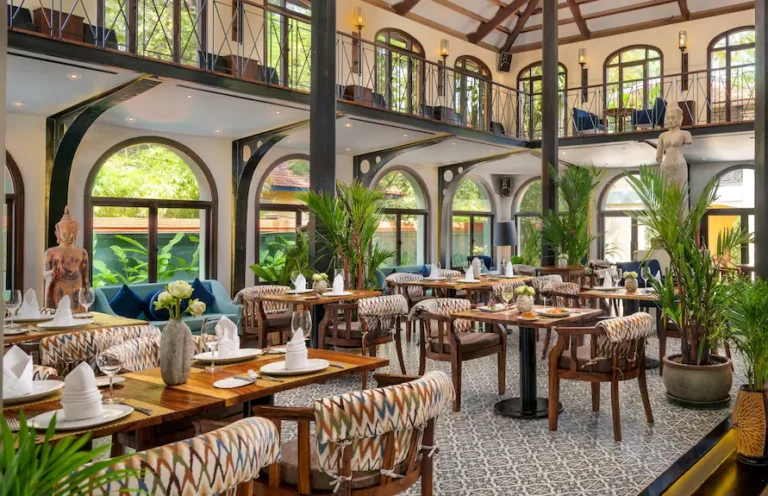
Heritage Suites Hotel
Simplicity and TraditionHeritage Suites Hotel is a characterful, colonial-style boutique retreat tucked beside Wat Polanka, about a kilometer north of the Old Market, which gives it a peaceful, residential feel while keeping the center of Siem Reap just a short tuk-tuk ride away. With only 26 rooms and suites set amid tropical gardens, the mood is intimate and grown-up, and the public areas center around a handsome saltwater pool, loungers, and an open, high-ceilinged restaurant and bar that work especially well for pre- and post-dinner drinks.
The real draw is the suite inventory: bungalow, pool, and residence pool suites come with private walled gardens, outdoor Jacuzzis or 8-metre plunge pools, and in-room steam rooms plus oversized stone bathtubs, creating a villa-like sense of privacy that suits couples and design-conscious family travelers. Interiors mix retro and Art Deco notes with Khmer touches, with color-washed walls, terrazzo, and mid-century-inspired furnishings, while amenities such as espresso machines, fine teas, and turndown service add a quiet layer of indulgence.
Heritage Suites Hotel, Near Wat Polanka, Slokram Village, Khum Slok Kram, Siem Reap, Cambodia, +855 63 969 100, info@heritagesuiteshotel.com, https://heritagesuiteshotel.com/
-
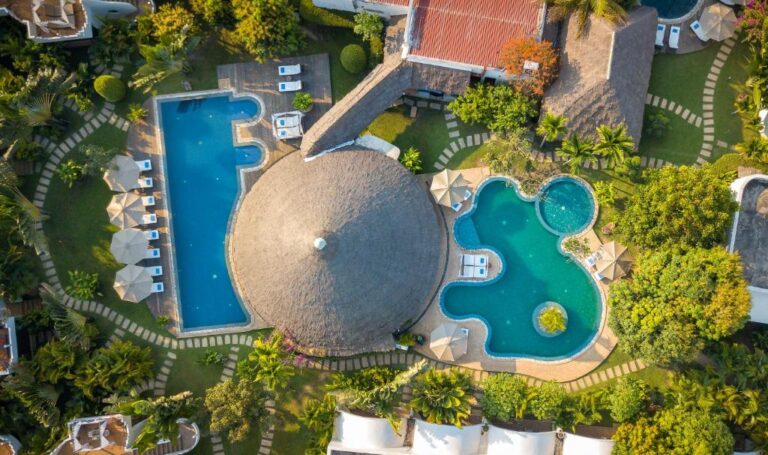
Navutu Dreams Resort & Wellness Retreat
Mediterranean-Meets-KhmerNavutu Dreams Resort & Wellness Retreat is a low-rise, Mediterranean-meets-Khmer hideaway on the edge of Siem Reap, laid out as a cluster of whitewashed pavilions and thatched-roof buildings around three palm-fringed pools and tropical gardens. Suites and rooms are spacious and individually styled, with high ceilings, terrazzo or tiled floors, and indoor–outdoor bathrooms; many open directly onto the pools or lawn.
There is a dedicated spa, daily yoga or movement classes, free bicycle use, and a program of retreats and tailor-made wellness packages that combine treatments, nutrition, and gentle activity. On-site dining at Niam Niam focuses on fresh, healthy international and Cambodian dishes, including vegetarian and special-diet options, and a tuk-tuk shuttle connects guests to Pub Street and the Old Market in around 5 to 10 minutes.
Navutu Dreams Resort & Wellness Retreat, Navutu Road, Siem Reap, Cambodia, +855 63 964 864, reservationsdreams@navuturesorts.com, https://navuturesorts.com/siem-reap/
-
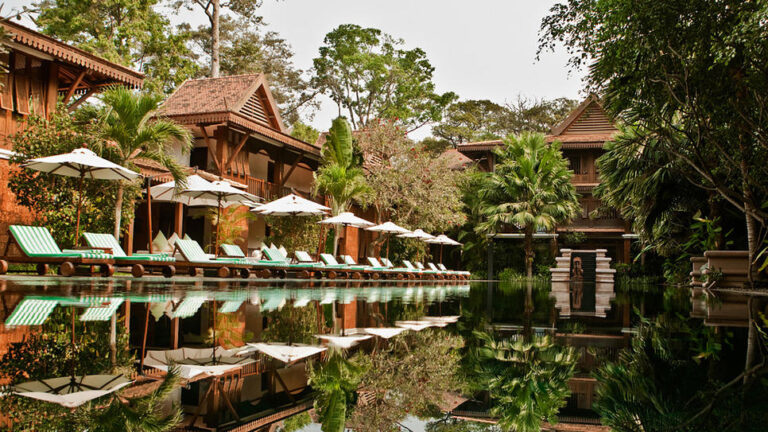
La Résidence Angkor
Reopening Q1 2027La Résidence d’Angkor, A Belmond Hotel, sits on the riverside in the Wat Bo area, offering guests a central yet cocooned base within walking distance of the Old Market and Pub Street, while still feeling like a leafy retreat. The low-rise buildings are styled in classic Khmer fashion with plenty of timber, open walkways, and greenery, and most suites overlook a long tropical saltwater pool and gardens, with private balconies or terraces that make the hotel feel like a compact resort.
Inside, rooms blend polished wood floors and handwoven silks with modern comforts such as air-conditioning, generous bathrooms, and well-thought-out lighting, so the spaces feel warm rather than overly formal. Public areas include the main pool framed by dense planting, an intimate restaurant and bar, and a small spa and fitness area. La Résidence Angkor is due to reopen at the beginning of 2027.
La Résidence Angkor,River Road, Krong Siem Reap, Cambodia, +855 63 963 390, info@hmdasia.com, https://laresidencehotels.com/
-
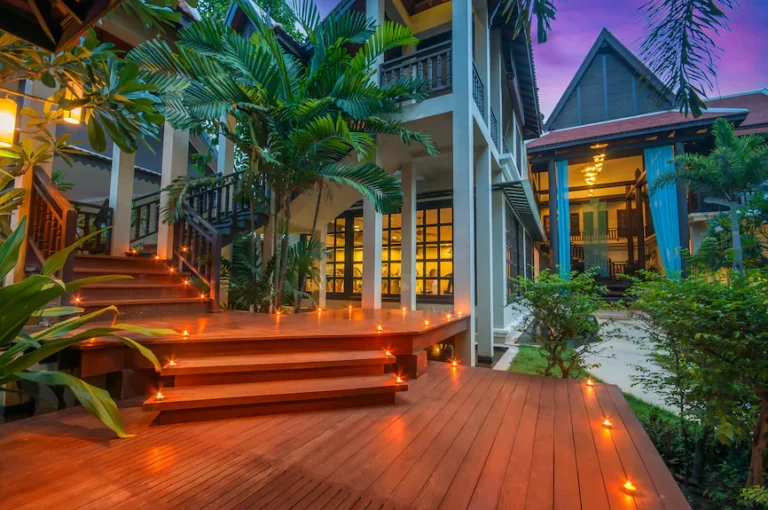
Borei Angkor Resort & Spa
Big Hotel ExperienceThe large, Khmer-style resort, Borei Angkor Resort & Spa, is on the eastern side of central Siem Reap, offering a classic big hotel experience with 180-plus rooms and suites, a broad tropical pool, and landscaped grounds that give it a self-contained, resort-like feel close to town. Rooms are spacious and traditionally furnished, with balconies in many categories, bathtubs and showers, and family-friendly configurations, making it a practical choice for groups and those who plan to spend real time using on-site facilities.
Guests have access to a large outdoor pool with a swim-up or poolside bar, a full-service spa and wellness area with sauna, steam room, and hot tub, a fitness centre, and multiple bars and restaurants ranging from all-day dining to a rooftop-style lounge. Regular cultural performances, cooking classes, and a generous breakfast buffet, alongside extras such as a kids’ pool, childcare services, and an airport or town shuttle, make Borei Angkor appealing to families.
Borei Angkor Resort & Spa, National Road 6, Banteay Chas, Siem Reap, Cambodia, +855 15 430 222, info@boreiangkor.com, https://www.boreiangkor.com/
-
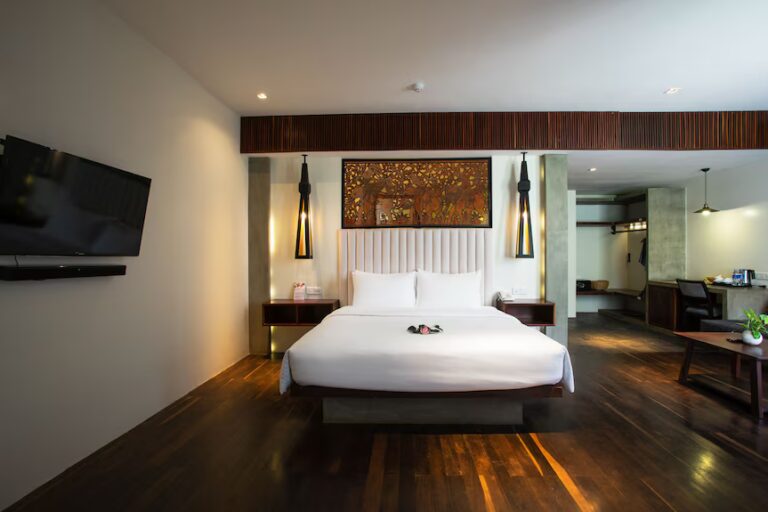
Apsara Residence Hotel
Peace And QuietApsara Residence Hotel is a well-regarded boutique option in Wat Bo Village, set on a quiet street about a 5- to 10-minute walk or a short tuk-tuk ride from Pub Street and the Old Market, making it handy for evenings out. Rooms are spacious, with balconies or pool views in many categories, separate seating areas, flat-screen TVs, air conditioning, and simple yet comfortable furnishings.
There is a small but inviting outdoor pool with loungers and a poolside bar, backed by a full-service spa, an on-site restaurant, and conveniences such as airport pickup, free Wi‑Fi, and a complimentary area shuttle within a few kilometers.
Apsara Residence Hotel, Village Wat Bo, 18 Street 27, Krong Siem Reap, Cambodia, +855 17 353 980, book@apsara-residence.com, https://apsara-residence.com/
-
Two-Day Itinerary
First-TimerFor a first-timer with two full days, start with a classic Angkor sunrise and a small circuit day. Arrange your temple pass the day before if possible, then leave your hotel around 4:30 am to reach Angkor Wat in time to claim a spot by the reflection pools before dawn; once the sun is up and the main crowds begin drifting back for breakfast, head inside to explore the galleries and upper levels while it is still relatively cool. Late morning, continue to Angkor Thom for Bayon’s enigmatic faces and the Terrace of the Elephants, then on to Ta Prohm for its famous jungle-draped corridors. For families with young kids, consider taking shorter temple visits and including more frequent breaks. Pause for a relaxed lunch at a simple restaurant within the park to refuel. To avoid exhaustion, retreat to your hotel for a rest and swim mid-afternoon, ensuring that everyone stays refreshed and happy.
As the heat eases, head into town to wander the Old Market and Made in Cambodia Market for souvenirs, crafts, and a sense of daily life, then stay on for an easy dinner and drinks around Pub Street. The street itself is busy and bright, with casual restaurants, cocktail bars, and foot-massage shops, while nearby alleys and the night market offer a slightly softer, more local-feeling experience; it is an ideal low-effort way to end a long temple day before an early night.
On day two, you can either deepen your Angkor experience with a grand circuit focusing on outlying highlights such as Preah Khan, Neak Pean, and, if you have the energy, Banteay Srei, or mix in something different like a half-day countryside or floating-village trip in the morning followed by one or two more temples in the afternoon. Aim to finish temple or touring time by late afternoon and book a proper massage at a reputable spa near Pub Street or along the river. Places like Bodia Spa or higher-end hotel spas offer Khmer and aromatherapy treatments that can be a welcome reset before dinner and a final wander through town.
-
Three-Day Itinerary
Culture And CountrysideFor a three-day Culture and Countryside plan, follow the classic first-timer outline on day one: a pre-dawn start for Angkor Wat sunrise, followed by Angkor Thom’s Bayon and the Terrace of the Elephants, and Ta Prohm’s jungle-wrapped courtyards, with a midday break back at your hotel to avoid the worst of the heat. In the late afternoon and evening, explore the Old Market and surrounding streets, graze on street food or casual Khmer restaurants, and end the night with a drink or foot massage around Pub Street or the nearby night markets.
Day two takes you towards the countryside. Join a guided trip to a floating village on Tonlé Sap. Kampong Phluk and Kampong Khleang are popular options for seeing stilted homes, seasonal water levels, and daily life on and around the water; ideally, time your visit for an afternoon boat ride and sunset on the lake. Back in town, spend an hour or two browsing Kandal Village’s boutiques and cafés or visiting a social enterprise café or gallery, then book a seat at one of Siem Reap’s fine-dining restaurants such as Embassy Restaurant or Cuisine Wat Damnak, for a tasting menu that gives a contemporary, elevated spin on Khmer flavors.
On day three, enjoy a slower combination of craft and city sights. Options include visiting a silk farm or a traditional crafts center, taking a pottery class, or joining a cycling tour that threads through villages, rice fields, and local markets to show how Cambodians live day to day. In town, you might add the Angkor National Museum, then finish with a restorative spa treatment and, if timing allows, an evening at Phare, The Cambodian Circus, which blends acrobatics, theatre, and live music to tell modern Cambodian stories.
-
Four- To Five-Day Itinerary
Slow Travel And WellnessFor a four- to five-day Slow Travel and Wellness plan, keep the first two days similar to a classic first-timer itinerary but ease the pace: sunrise at Angkor Wat, a focused selection of key temples Angkor Thom, Ta Prohm, maybe Banteay Srei or Preah Khan, plus an afternoon rest by the pool and one or two unhurried evenings in the Old Market and Pub Street area. Build in at least one full spa treatment or foot massage each day, and consider a gentle cycling tour instead of a second full-day temple run.
Days three and four are about offbeat temples and the countryside. Choose one or two less-visited sites, such as Beng Mealea, Phnom Krom, or Kbal Spean, paired with a picnic, a waterfall dip at Phnom Kulen, or a slow walk through forested paths, keeping your schedule light so you can linger where it feels right rather than ticking boxes. Balance these outings with a half-day on Tonlé Sap on a more community-focused floating village tour, and a visit to artisan workshops or a silk farm, which deepen the cultural context while still leaving you time to be back at the hotel for sunset, yoga, or a long soak.
If you have a fifth day, lean fully into wellness. Many resorts and studios in Siem Reap offer yoga and meditation sessions, holistic healing or breathwork, and multi-day wellness packages that combine movement, spa therapies, and healthy menus, so you can structure the day around a morning class, midday spa, and an unstructured afternoon by the pool or river. Use the final evening for a special dinner or a cultural performance, then a quiet stroll along the river or through Wat Bo’s side streets.



 Recommends